Understanding the Costs and Benefits of Metal Roofing
Outline and Why Metal Roofing Deserves a Closer Look
Metal roofing sits at the intersection of durability, design, and long-term value, making it a compelling option for homeowners who think beyond the next storm season. As weather patterns shift, energy prices zigzag, and building codes tighten, the roof over your head becomes more than a rain shield—it’s a financial decision with ripple effects on comfort, insurance, and resale. Metal systems have matured well beyond utilitarian barns; today they offer refined profiles, color-stable finishes, and assemblies engineered for high wind, hail, and fire resistance. Still, costs and choices vary widely, which is why a grounded, number-forward guide is worth your time.
Here is the roadmap for what follows, so you can skim to what matters and circle back for details:
– Metal Roofing Material Choices and Cost Ranges: Steel, aluminum, zinc, and copper compared, with notes on coatings, profiles, and typical U.S. price ranges per square foot.
– Installation, Labor, and the Hidden Line Items: How roof geometry, tear-off, underlayments, and flashing details shape the final invoice.
– Lifespan, Energy, and Total Cost of Ownership: What holds up, what needs upkeep, and how to model long-run dollars rather than guess.
– Regional Factors and Decision Framework: Climate, code, design goals, and how to match them with the right system.
– Buying Checklist and Bid Comparison: A clean way to evaluate proposals line-by-line and avoid change-order surprises.
Two practical notes set expectations. First, all costs are broad national ranges that swing by region, season, and market conditions; use them to test the logic of a bid, not as an absolute quote. Second, no roof is inherently cheap or expensive in isolation—design complexity and installation craft move the needle as much as the metal itself. Read with a pen, mark what matches your house and climate, and you’ll finish with a shortlist that’s easier to price and defend. If you like a little story with your specs, imagine your roof as a quiet co-investor: it asks for a thoughtful down payment and pays you back in fewer leaks, steadier bills, and calmer storm nights.
Metal Roofing Material Choices and Cost Ranges
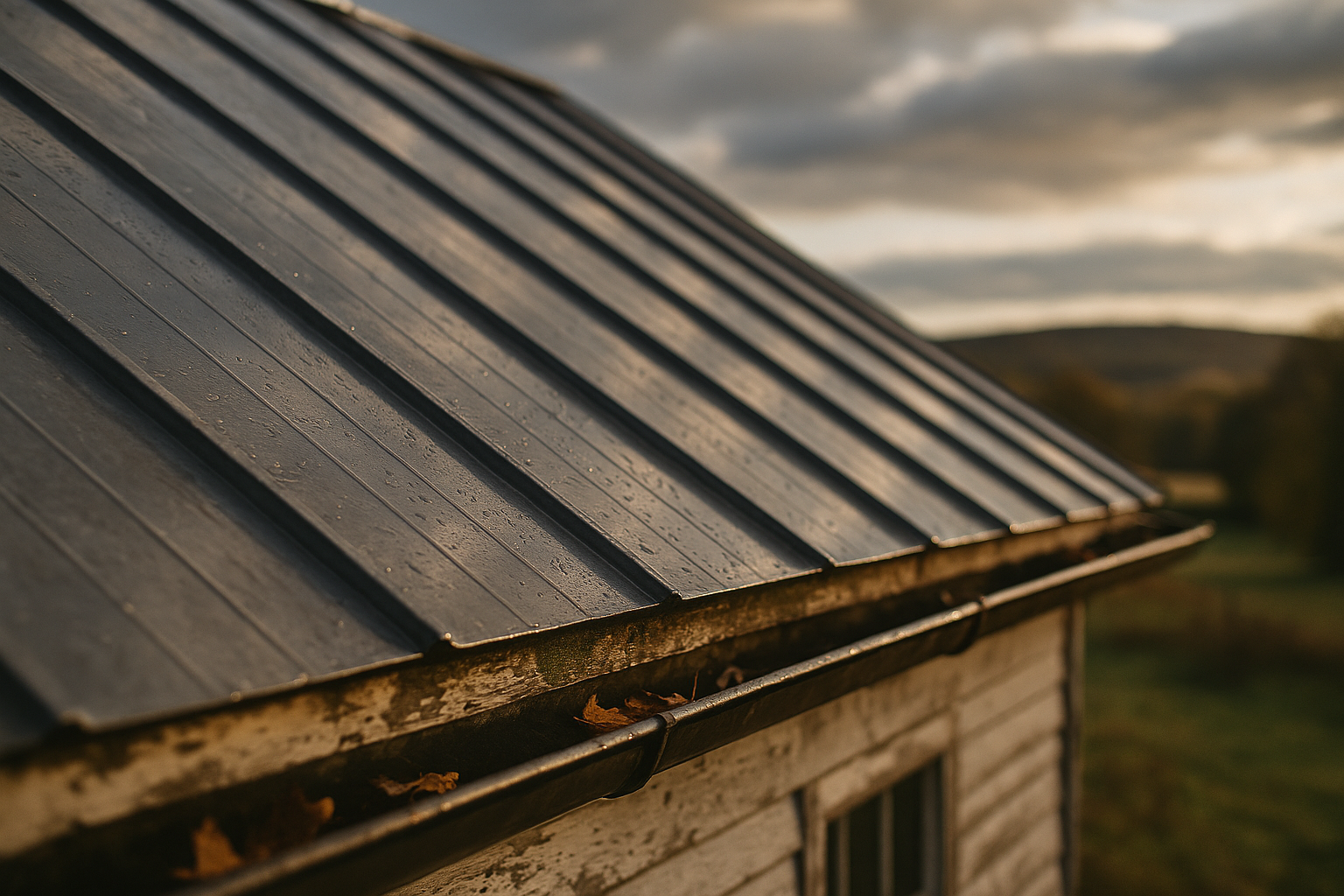
Selecting a metal roof starts with four broad families—steel, aluminum, zinc, and copper—each with trade‑offs in price, weight, corrosion resistance, and aesthetics. Steel is the workhorse: widely available, relatively light (often around 1.0–1.5 lb/sq ft depending on gauge), and offered in two common corrosion barriers: galvanized (zinc) and zinc‑aluminum alloy coatings. Aluminum resists salt air and is a frequent choice in coastal zones. Zinc and copper are premium metals that form protective patinas over time, rewarding patient owners with evolving color and texture. Profiles range from exposed‑fastener corrugated panels to concealed‑fastener standing seam and interlocking shingles; coatings span durable PVDF paints for color stability to textured finishes that mute glare and hide small surface irregularities.
Material-only price ranges in the U.S. can serve as a first filter:
– Exposed‑fastener steel panels (29–26 gauge): about $1.50–$4.00 per sq ft.
– Standing seam steel (26–24 gauge): about $3.50–$7.50 per sq ft.
– Aluminum panels or shingles: about $4.00–$8.50 per sq ft.
– Zinc or copper: roughly $9.00–$20.00+ per sq ft depending on thickness and market conditions.
Installed pricing (materials, accessories, and labor) reflects roof complexity, local wages, and scope:
– Exposed‑fastener steel: roughly $6.00–$11.00 per sq ft on simple gables.
– Standing seam steel: roughly $9.00–$16.00 per sq ft; hips, valleys, and multiple penetrations trend higher.
– Aluminum: roughly $10.00–$18.00 per sq ft, with coastal hardware upgrades.
– Zinc and copper: roughly $16.00–$30.00+ per sq ft, driven by metal markets and specialist labor.
For a 2,000‑sq‑ft roof (about 20 squares), that translates to ballpark installed totals of $12,000–$22,000 for exposed‑fastener steel, $18,000–$32,000 for standing seam steel, $20,000–$36,000 for aluminum, and $32,000–$60,000+ for zinc or copper. Thickness (gauge) matters: heavier steel (lower gauge numbers) resists denting and oil‑canning better but costs more. Finish quality matters too: high‑performance paint systems typically carry longer fade and chalk warranties and maintain curb appeal, which can support resale value. Metal’s low weight can be an advantage on older structures, yet installers still verify decking integrity and fastening substrates. In short, if you prioritize upfront economy, exposed‑fastener steel on a simple roof is often the entry point; if you want cleaner lines, tighter weathering control, and stronger wind performance, concealed‑fastener standing seam earns a close look. Premium metals add design longevity and patina charm for owners comfortable with longer horizons.
Installation, Labor, and the Hidden Line Items
Ask three contractors for a metal roof and you may see three very different numbers. Often, the delta is not the panel price but the scope and craft required to integrate the roof with a real house—edges, eaves, valleys, chimneys, skylights, and vents. Labor intensity rises with every plane break, pitch change, and penetration, which is why a small, steep Victorian can outprice a larger, simple ranch. Exposed‑fastener systems install faster and with fewer specialized tools, while standing seam requires layout precision, panel hemming, clip spacing, and on‑site metal shaping. Crews may also need seamers, brakes, and lifts, which show up in mobilization and equipment fees.
Expect these line items to influence the final invoice:
– Tear‑off and disposal: about $1.00–$3.00 per sq ft; multiple shingle layers or heavy tiles push higher.
– Deck repairs: budget an allowance; localized sheathing replacement can run $2.00–$5.00 per sq ft of affected areas.
– Underlayments: synthetic felt roughly $0.50–$1.00 per sq ft; high‑temp peel‑and‑stick in valleys and eaves $1.00–$2.00 per sq ft.
– Flashings and trim: custom bent metal at eaves, rake, valley, and wall transitions; complex chimney or skylight kits can add several hundred dollars each.
– Ventilation: ridge vent materials and labor commonly $8–$15 per linear foot; intake optimization may require soffit work.
– Snow management in cold climates: snow guards or bar systems at $5–$40 per linear foot depending on design.
– Fasteners and clips: small per‑piece costs scale with square footage and panel layout.
– Safety and access: staging, fall protection, or lift rentals can add $300–$800 per day.
– Permits and inspections: municipality‑dependent, often $100–$800, plus potential engineering letters in high‑wind zones.
Time adds money. Tight sites, limited dump access, and weather windows can stretch schedules, and material price volatility sometimes triggers escalation clauses. Clarify lead times on custom colors or long panels—longer lengths reduce vertical seams but demand careful handling and site access. On multi‑trade projects, sequencing with gutter, solar, or masonry teams prevents rework; for example, standing seam pairs neatly with solar clamps that avoid new penetrations, but coordination is essential. Finally, overhead and profit are not “padding”—they fund warranties, service calls, and businesses that answer the phone five years later. When comparing bids, align scope first, then evaluate labor approach and detail pages. The quiet money in roofing is in edges and transitions; that’s where leaks start or never happen.
Lifespan, Energy, and Total Cost of Ownership
Service life is where metal often earns its keep. Quality steel or aluminum panels with durable factory finishes routinely carry 25–40‑year finish warranties, with roof assemblies commonly lasting 40–60 years when installed over sound decking with correct flashings. Premium metals like zinc and copper can extend well beyond that horizon, developing protective patinas rather than relying only on coatings. Exposed‑fastener systems trade lower upfront cost for periodic attention: screws seated into panels should be checked as washers age, typically on a 10–15‑year rhythm, and repaints may be considered in some climates after a few decades. Concealed‑fastener standing seam avoids most through‑panel fasteners, reducing the number of potential leak points and often stretching maintenance intervals.
On the energy side, cool‑roof finishes with high solar reflectance and thermal emittance can lower attic heat gain. In hot regions, homeowners often see cooling energy reductions on the order of 10–25% compared with darker, heat‑absorbing roofs, especially when assemblies include above‑sheathing ventilation or radiant barrier underlayments. Light colors reflect more, but even medium tones with efficient coatings can moderate peak loads. In heating‑dominated climates, winter reflectivity has a smaller penalty than many fear, as snow cover, sun angle, and attic insulation dominate the heat balance. Good air sealing, continuous insulation where feasible, and balanced intake and ridge ventilation do as much for comfort as any color chip.
Total cost of ownership (TCO) favors modeling over guessing. A simple framework:
– Upfront installed cost (C0).
– Annual maintenance (M) and expected replacements of consumables (e.g., sealants).
– Annual energy impact (E), positive in savings.
– One‑time future events (F), such as a second reroof avoided with metal versus an asphalt replacement in year 20–25.
– Residual or salvage value (S) at the end of the analysis horizon.
Consider a 2,000‑sq‑ft home. If a standing seam steel roof comes in at $14/sq ft installed ($28,000) versus $6/sq ft for quality shingles ($12,000), the delta is $16,000. Suppose cooling savings average $250 per year and maintenance averages $100 annually for either roof, while the shingle roof needs a $15,000 replacement around year 22 (today’s dollars, ignoring inflation for simplicity). Discounting cash flows at a modest real rate, the avoided replacement meaningfully narrows the gap by mid‑life, and in hotter climates the energy line item helps further. None of this is one‑size‑fits‑all, but the math shows why many long‑term owners prioritize assemblies that can cross decades without a tear‑off. Add non‑cash benefits—hail and fire ratings that may support insurance discounts, quieter HVAC summers, cleaner solar integration—and the roof starts to look like an asset, not just an expense.
Decision Framework, Regional Factors, and a Smart Buying Checklist
Good roofing choices start with goals. Write down what matters most—longevity, storm resilience, coastal durability, quieter interiors, or a specific architectural look—and let that drive material and profile decisions. Next, match the roof to the climate. In coastal or brackish zones, aluminum and certain premium metals resist corrosion better than bare or lightly coated steel, and hardware should shift to marine‑appropriate alloys. In snow country, plan high‑temp underlayment at eaves and valleys, sturdy ice‑barrier details, and snow retention above walkways. Hail‑prone regions benefit from thicker gauges and impact‑rated assemblies. In wildfire‑exposed areas, select a Class A assembly, close off ember pathways at edges, and specify metal soffits and mesh at vents to complement the roof’s inherent fire resistance. High‑wind locales call for concealed clips, tighter fastener schedules, and attention to edge metal and substrate attachment.
Solar now or later? Standing seam integrates cleanly with clamp‑on racking that avoids new penetrations, while exposed‑fastener systems require flashed mounts. If solar is in your 5‑year plan, note panel spacing and walkway zones early. For complex roofs with multiple penetrations, interlocking metal shingles may adapt neatly around dormers and valleys while preserving the metal roof’s durability advantages. Aesthetics matter, too: darker hues lend a quieter silhouette, lighter finishes punch up energy performance; matte textures soften reflections on low‑slope views.
When you’re ready to collect bids, use a consistent checklist:
– Draw the roof to scale and count penetrations; share the same sketch with every bidder.
– Specify material (metal type, thickness), profile (standing seam width, corrugated profile), and finish (coating type and color).
– Call out underlayments, ice‑barrier zones, ventilation approach, and flashing details at chimneys, skylights, and wall transitions.
– Ask for line items: tear‑off, disposal, deck repairs (allowance), accessories, safety, equipment, permits, and contingencies.
– Confirm lead times, jobsite protection plans, and daily cleanup.
– Require proof of licensing, insurance, and a sample warranty document; understand who covers labor versus materials and for how long.
– Review payment schedule, change‑order policy, and escalation clauses tied to metal markets.
Finally, plan for ownership. Schedule an annual roof walk‑around after major storms, clear valleys and gutters, and document any adjustments. Keep records: finish codes, coil lot numbers if provided, and installer contact details. If you love the idea of a roof that ages gracefully, consider metals that patinate and neighborhoods that welcome them; if you prefer a stable, long‑lasting color, specify high‑grade coatings with documented fade/chalk performance. With a clear brief and aligned bids, you can choose a system that fits both your climate and your timeline—no guesswork, no regrets, just a roof that quietly does its job for years to come.